






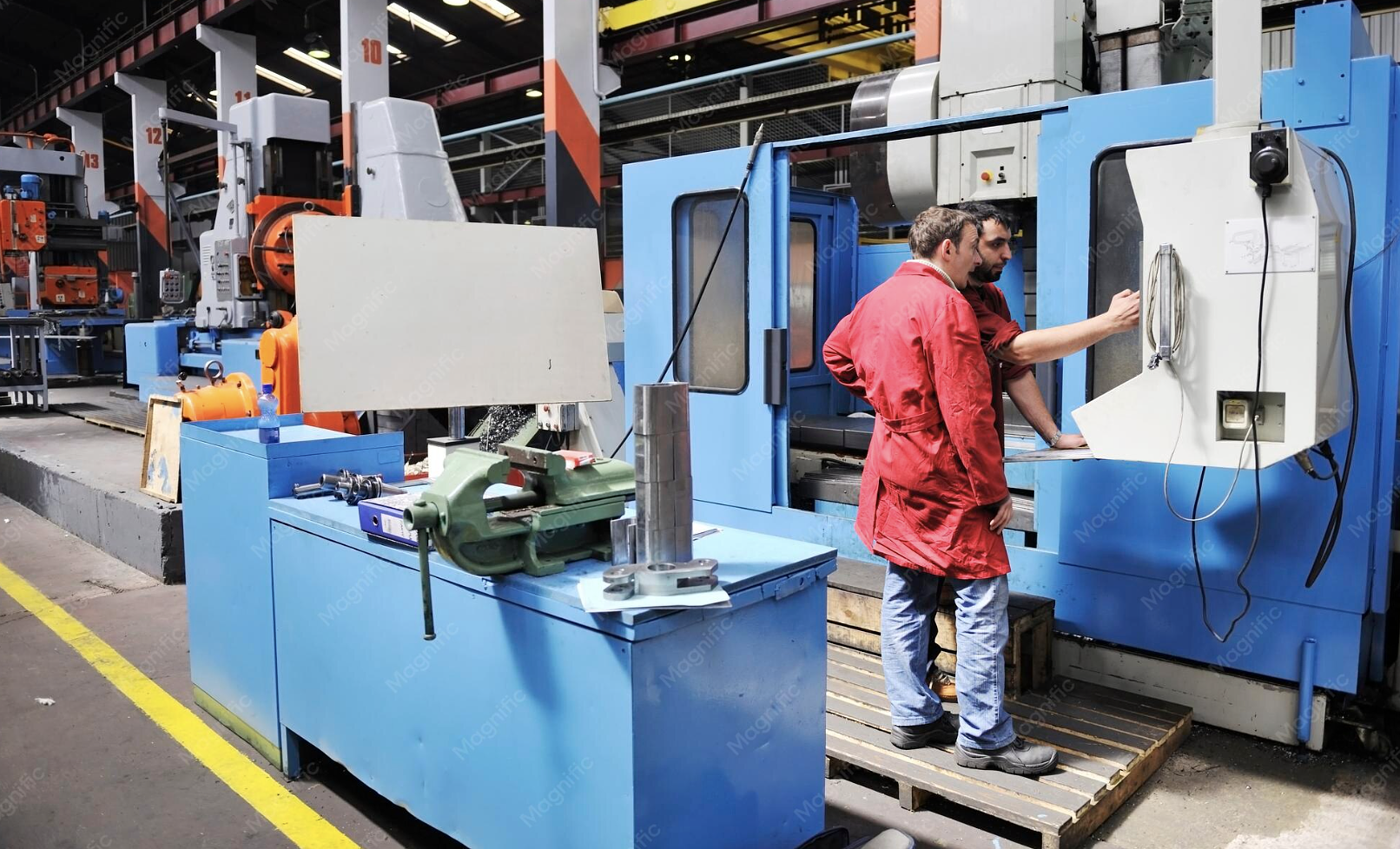
Buying a CNC machine is one of the largest capital decisions a Canadian shop makes. The choice between used and new sets your purchase price, your lead time, and how quickly the machine starts earning. This guide compares the two on total cost of ownership so you can match the decision to your shop and the parts you run.
Is it cheaper to buy a used CNC machine?
Yes. A used CNC machine usually sells for 40–60% of the price of an equivalent new model, and the previous owner has already absorbed the steepest depreciation. For proven, well-supported machines, that lower entry cost rarely means lower capability on the shop floor.
New machines lose value fastest in their first two to three years. A used buyer skips that drop and pays for the capability rather than the badge. A low-hour used vertical machining centre from a mainstream builder often performs to the same tolerances as its new equivalent while freeing capital for tooling, fixturing, or a second machine.
How much does a used CNC machine cost compared to new in Canada?
Price depends on machine class, age, spindle hours, control generation, and condition. Expect a used machining centre to land near half to two-thirds of new. Well-maintained, low-hour machines from builders like Mori Seiki, Mazak, or Okuma command the top of that range.
Four factors move the number most: spindle hours, the age of the CNC control, the tooling and accessories included, and the documented condition. Buying within Canada also removes the currency and border costs that come with a US import, so a domestic used machine often beats a cross-border deal once exchange, duty, and brokerage are counted. Turned-part shops weighing a lathe can apply the same logic to a used CNC turning centre.
What is the lead-time difference between used and new?
Used machines ship in days to a few weeks because the machine already exists. New machining centres often carry lead times of several months to a year, since the builder produces to order. For a shop with a contract already booked, that gap alone can decide the purchase.
Lead time is a real cost, not a footnote. A machine that arrives in two weeks starts cutting billable parts almost immediately, while a new-build order can leave a booked job waiting past its delivery date. Used capacity is the faster route to first cut.
Do used CNC machines hold their value?
Yes, and more predictably than new. A used machine has already passed the fastest part of its depreciation curve, so from that point it loses value more slowly. A well-maintained machine resold after several years often recovers a large share of what you paid for it.
Manufacturing machinery is a depreciable asset in Canada, claimed through Capital Cost Allowance. The applicable class and rate change over time, so confirm the current treatment with your accountant or the CRA before you model the after-tax cost.
What are the risks of buying used, and how do you manage them?
The main risks are hidden wear, an outdated control, and power incompatibility. Manage them with a documented spindle-hour count, an under-power test that runs the axes and spindle, and a check that the machine matches Canadian 575/600 V three-phase power before you commit.
Wear shows up in spindle hours and way condition; an under-power test reveals what photos cannot. Control generation matters because parts and programming support thin out on older systems. Power is the most common surprise on cross-border buys: because a Canadian shop runs 600 V and a US machine is wired for 480 V, the machine needs a matched step-down transformer or drive to run on the Canadian grid, and budgeting for that up front keeps the deal honest.
Used or new: which is right for your shop?
Choose used when you need proven capability now, want a lower capital outlay, and can inspect the machine properly. Choose new when you need the latest control, a configuration that is not available used, or a builder warranty that the contract requires.
Most Canadian job shops buying established machine types come out ahead on used equipment: lower cost, faster delivery, and slower depreciation, with condition risk that a proper inspection removes. New earns its premium mainly on cutting-edge work or when a specific machine simply is not on the used market.