






"Machining supplies" sounds like a box of drill bits, but a working shop runs on far more than consumables. The term covers everything a Canadian machine shop needs to cut, hold, measure, and maintain metal parts, organised here into four layers, from the capital machinery on the floor down to the spare drive that keeps it running. This guide defines each layer and shows where the money and the risk sit.
What are machining supplies?
Machining supplies are the equipment, tooling, consumables, and spare parts that a machine shop uses to remove and finish metal. They fall into four layers: capital machinery, toolholding and workholding, consumable cutting tools and fluids, and replacement parts. Together they turn raw stock into finished components.
Most buyers picture only the third layer, the cutting tools, but the machinery underneath it is the largest cost and the one that decides what work a shop can win. Reading machining supplies as four connected layers helps a shop budget correctly and buy in the right order: the machine first, then the tooling that mounts to it, then the consumables it burns through, and the parts that keep it alive.
Layer 1: What machinery counts as a machining supply?
Layer one is the capital equipment, the machines that cut metal. It includes CNC machining centres, turning centres and lathes, milling machines, grinders, boring mills, presses, and gear and plastic machinery. This layer is the largest single investment a shop makes and the foundation the other three layers serve.
The machine sets the shop's capability. A vertical machining centre mills and drills prismatic parts, a horizontal machining centre runs higher-volume multi-sided work, and a CNC turning centre produces round parts. Surface grinders and boring mills finish and size, while press brakes, shears, and presses handle fabrication. Buying this layer used, rather than new, is where Canadian shops save the most capital, because the machine has already passed its steepest depreciation.
Layer 2: What is toolholding and workholding?
Layer two connects the cutting tool and the workpiece to the machine. Toolholding collets, milling chucks, and spindle holders in CAT40, BT40, CAT50, or HSK tapers grips the cutting tool. Workholding vises, chucks, clamps, and fixtures locks the part in place so it can be cut accurately.
This layer is easy to underestimate and expensive to complete. A machining centre with a 24-pocket tool changer needs a matching set of toolholders before it cuts a single part, and each holder must match the spindle taper. On the workpiece side, a milling job needs vises and fixtures while a lathe needs chucks and jaws. Rigidity in this layer directly affects finish and tolerance, a part that moves in a worn vise scraps regardless of how good the machine is.
Layer 3: What consumables do machining operations need?
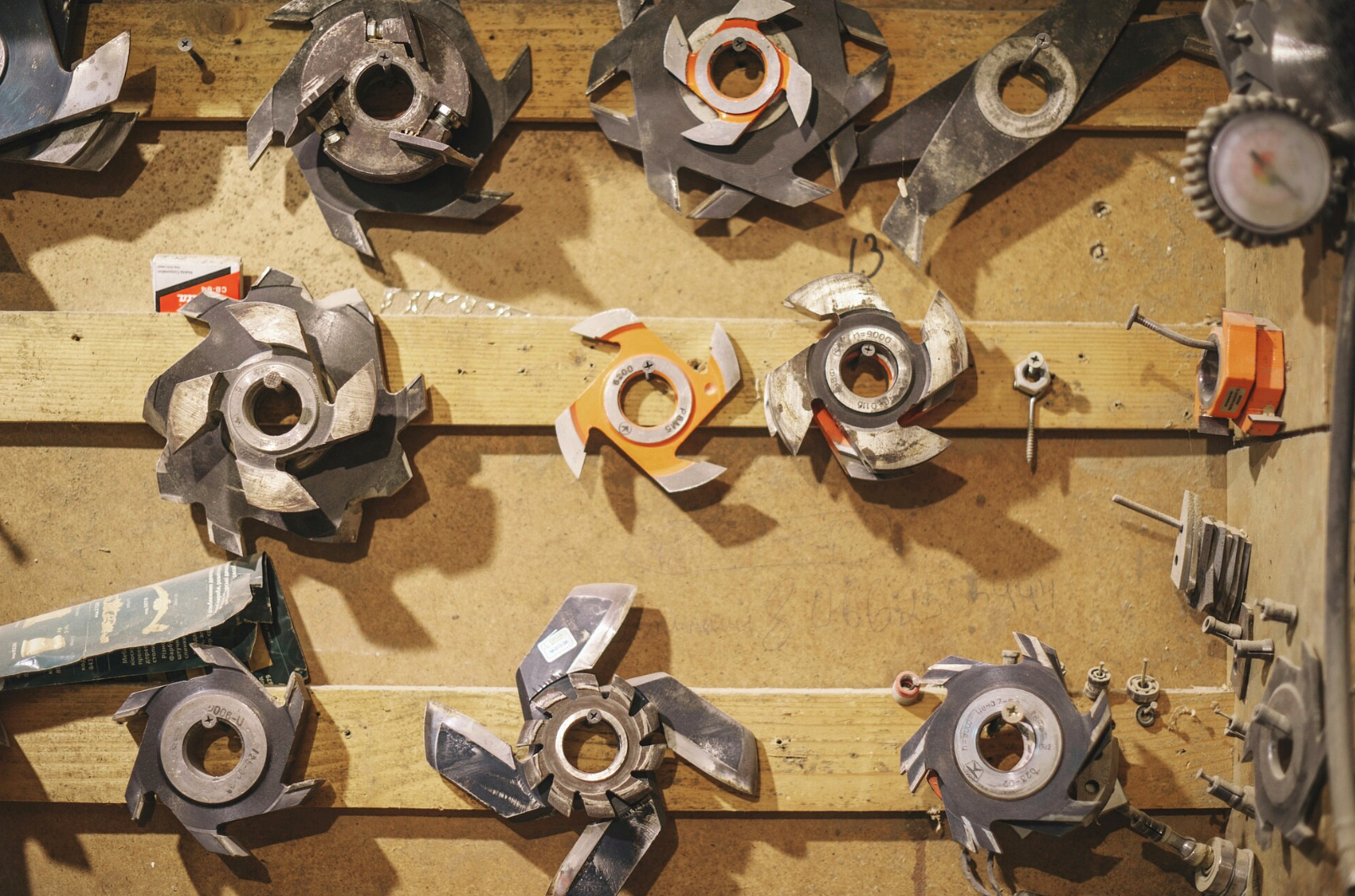
Layer three is the consumables that wear out with use: cutting tools and metalworking fluids. Cutting tools include drills, end mills, taps, reamers, and indexable inserts, matched by coating and geometry to the material. Metalworking coolants and cutting oils control heat, clear chips, and extend tool life.
These are the items most people mean by "machining supplies," and they recur as an operating cost rather than a capital one. Cutting tools are selected by the workpiece material and the coating that suits it, and inserts are swapped out as edges wear. Coolant is mixed to concentration and maintained by pH and refractometer reading. Consumables are a smaller line item than the machine, but poor choices here quietly raise cost per part across every job.
Layer 4: What spare parts keep a machine running?
Layer four is the replacement parts that keep capital equipment in service: drives, servo motors, control boards, and the transformers that match a machine to the shop's power. A single failed part can idle a machine, so access to spares turns downtime from days into hours.
This layer is where a used-machine dealer with a parts inventory earns its keep. An older CNC control may need a replacement board or drive or servo motor to stay productive, and an imported machine needs a matched transformer to run on Canadian power. Sourcing spares from the same supplier that sold the machine shortens every future repair, because the machine's history and configuration are already known.
Which layer should a Canadian shop prioritise when buying used?
Prioritise the machine layer one because it is the largest cost and the constraint on what work you can take. Then complete the toolholding and workholding to match it, budget consumables as an ongoing operating cost, and confirm spare-parts availability before purchase so a fault does not strand the machine.
Buying in this order prevents the common mistake of a great machine that cannot run because the tooling budget was spent elsewhere. Cost roughly steps down through the layers: the machine is the capital anchor, toolholding is a meaningful one-time fit-out, consumables recur, and parts are an insurance line. A shop that plans all four before signing avoids the surprises that turn a good used-machine deal into an expensive one.
Where can Canadian shops source all four layers?
Gizmo Machine Tools supplies the machinery of layer one and the spare parts of layer four from Mississauga, Ontario, with delivery and installation across Canada. Sourcing the machine, the matching transformer, and installation from one supplier removes the gaps where a used-machine purchase usually stalls.
Buying within Canada keeps the whole stack coherent: machines already suited to 600 V power, spares on hand, and a service team that can commission the equipment. Browse current stock by machine type, and factor all four layers, machine, toolholding, consumables, and parts into the budget from the start rather than discovering the missing pieces after delivery.